
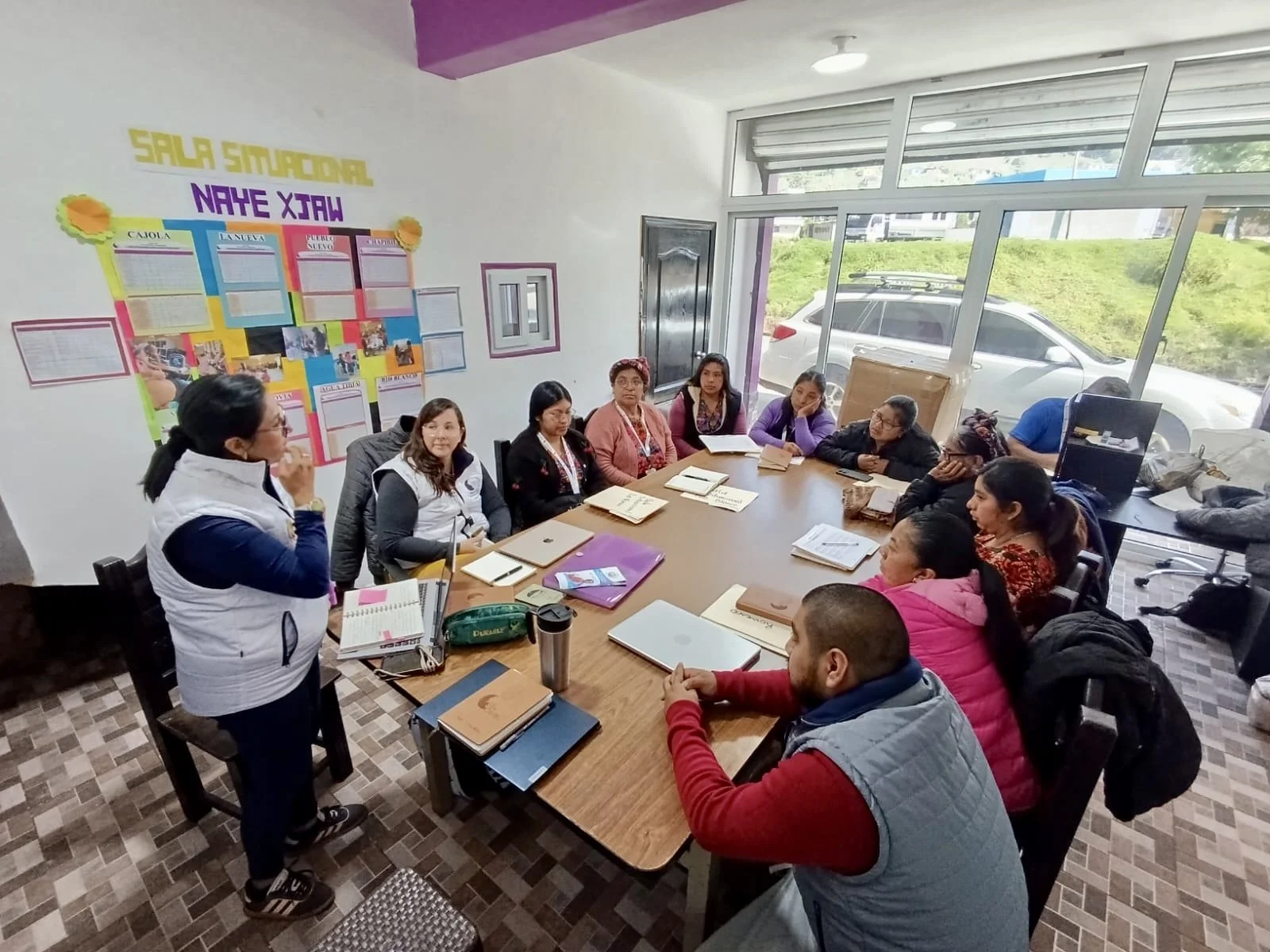
Our Model
Naye Xjaw Maya Midwifery International integrates health, culture, environment, and governance into a single, community-led system of care.
Most maternal health programs focus on training.
We build the conditions that allow midwives to practice—effectively, safely, and with dignity.
Our model operates through four interconnected pillars.
-
Maya Mam midwives safeguard, apply, and transmit the knowledge that underpins maternal and community health.
This includes medicinal plants, traditional birth practices, spiritual care, and community-based systems of healing developed over generations.
This knowledge is not archived—it is actively practiced, taught, and transferred through midwife-led care and apprenticeship.
At the same time, this work protects the ecosystems that make care possible. Medicinal plants, water sources, and local food systems are foundational to health outcomes.
As environmental pressures increase, the continuity of midwifery practice is at risk.
By integrating cultural knowledge with ecological stewardship, Naye Xjaw ensures that midwives retain the resources, knowledge, and conditions required to provide care.
Health systems do not exist in isolation.
They are rooted in land, knowledge, and community. -
Midwives are trained, mentored, and supported as skilled healthcare providers and community leaders.
Through apprenticeship, continuous training, and formal employment, midwives are recognized, compensated, and able to sustain their work across generations.
[ Learn more about Midwife Development & Training ]
-
Care is delivered through the Birth and Reproductive Health Center and seven rural mobile clinics, connecting facility-based and community care.
Services include:
Prenatal and postpartum care
Safe, respectful births
Newborn and well-woman care
Family planning and reproductive health servicesAll care integrates ancestral knowledge with evidence-based biomedical practices—ensuring both cultural safety and clinical quality.
[ Learn more about Care Delivery ]
-
Naye Xjaw is not only delivering care—it is demonstrating a model that reshapes how maternal health systems recognize and support Indigenous midwifery.
This work informs how institutions, policymakers, and global health actors understand midwives as essential healthcare providers.
Through engagement, knowledge exchange, and participation in national and international spaces, the model contributes to a shift:
from exclusion to integration
from informal labor to recognized workforce
from fragmented programs to system-based approachesThis influence is grounded in practice—not theory.
Built on more than two decades of continuous midwife-led care, measurable outcomes, and accountable governance, Naye Xjaw is positioned as a reference point for Indigenous-led health systems.
This model addresses a critical gap:
health systems often overlook the providers already delivering the majority of care.This is not a program.
It is a system designed for continuity, dignity, and long-term impact.
This model addresses a critical gap:
health systems often overlook the providers already delivering the majority of care.
This is not a program.
It is a system designed for continuity, dignity, and long-term impact.
OUR FOUR PILLARS

Preserve
Maya Mam midwives safeguard, apply, and transmit the knowledge that underpins maternal and community health.
This includes medicinal plants, traditional birth practices, spiritual care, and community-based systems of healing developed over generations.
This knowledge is not archived—it is actively practiced, taught, and transferred through midwife-led care and apprenticeship.
At the same time, this work protects the ecosystems that make care possible. Medicinal plants, water sources, and local food systems are foundational to health outcomes.
As environmental pressures increase, the continuity of midwifery practice is at risk.
By integrating cultural knowledge with ecological stewardship, Naye Xjaw ensures that midwives retain the resources, knowledge, and conditions required to provide care.
Health systems do not exist in isolation.
They are rooted in land, knowledge, and community.
Ancestral Knowledge & Biodiversity
Develop
Midwives are trained, mentored, and supported as skilled healthcare providers and community leaders.
Through apprenticeship, continuous training, and formal employment, midwives are recognized, compensated, and able to sustain their work across generations.
Midwives as Health Leaders
Culturally Grounded CareDeliver
Care is delivered through the Birth and Reproductive Health Center and seven rural mobile clinics, connecting facility-based and community care.
Services include:
Prenatal and postpartum care
Safe, respectful births
Newborn and well-woman care
Family planning and reproductive health services
All care integrates ancestral knowledge with evidence-based biomedical practices—ensuring both cultural safety and clinical quality.

System Influence & ReplicationPromote
Naye Xjaw is not only delivering care—it is demonstrating a model that reshapes how maternal health systems recognize and support Indigenous midwifery.
This work informs how institutions, policymakers, and global health actors understand midwives as essential healthcare providers.
Through engagement, knowledge exchange, and participation in national and international spaces, the model contributes to a shift:
from exclusion to integration
from informal labor to recognized workforce
from fragmented programs to system-based approaches
This influence is grounded in practice—not theory.
Built on more than two decades of continuous midwife-led care, measurable outcomes, and accountable governance, Naye Xjaw is positioned as a reference point for Indigenous-led health systems.
This model addresses a critical gap:
health systems often overlook the providers already delivering the majority of care.
The Principles That Govern This Model
Naye Xjaw Maya Midwifery International operates through a defined set of principles that shape how power is held, how decisions are made, and how relationships are structured.
These are not aspirational statements.
They are embedded in governance, financial systems, and daily operations.
-
Maya communities and midwives define, govern, and protect their knowledge, practices, and pathways to health and wellbeing. Decision-making authority over programmatic priorities resides with Indigenous leadership.
-
Midwives, elders, and community leaders guide all aspects of the work. Initiatives originate from and remain accountable to the communities they serve.
-
Structures are designed to prevent the concentration, misuse, or external capture of power. All actors—internal and external—are accountable to Indigenous governance systems and community-defined priorities.
-
Partnerships must ensure equitable benefit, shared authorship, and respect for community ownership and control. Knowledge, labor, and legitimacy are not extracted.
-
All actions, partnerships, and decisions remain grounded in Maya worldviews, languages, and traditions—and answerable to the communities served.
-
The model challenges colonial structures in maternal health by centering Indigenous knowledge while enabling integration with biomedical practice—without displacing Indigenous authority.
-
The dignity, autonomy, and leadership of women and birthing people are central, ensuring access to respectful and culturally rooted care.
-
Maternal health is inseparable from the health of land and ecosystems. Traditional medicine, water sources, and food systems are protected through community-led stewardship.
-
Resources are managed with transparency, accountability, and responsibility—ensuring fair compensation, sustainability, and the wellbeing of all involved.
These principles are operationalized through governance structures, financial systems, and institutional safeguards.